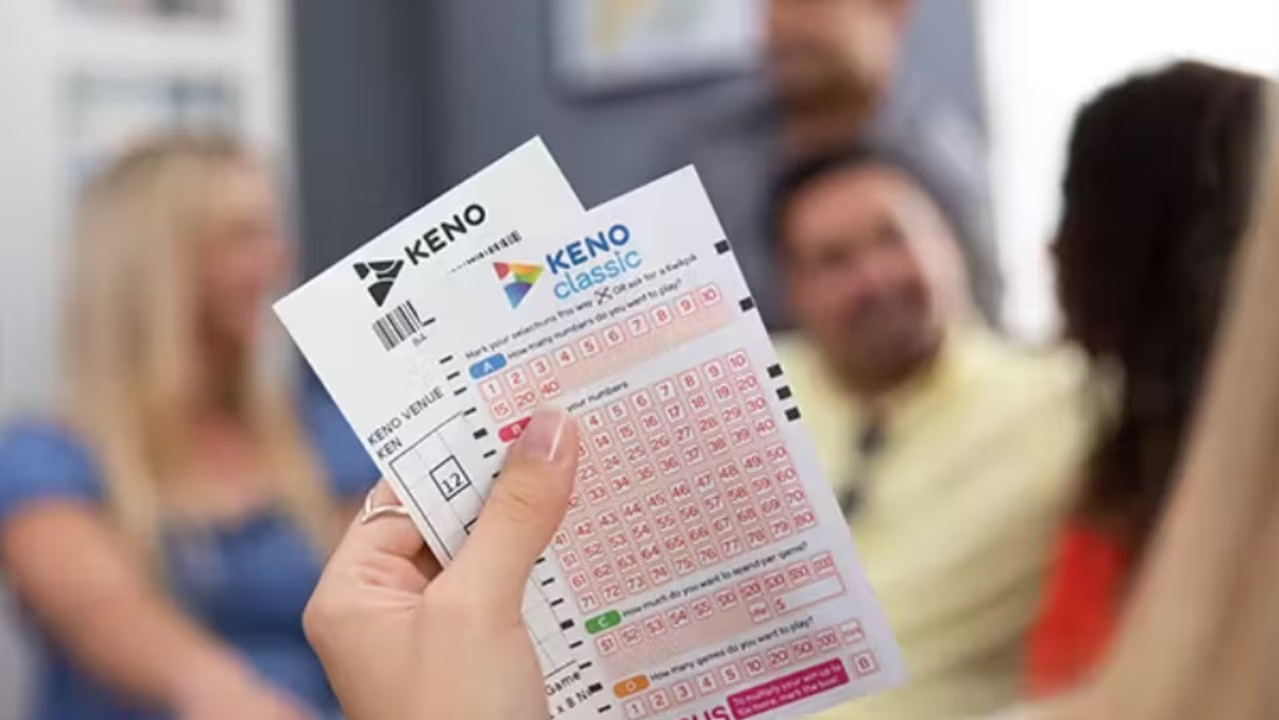
Blockchain keno diverges fundamentally from traditional keno halls through decentralised operation, instant settlement, provable fairness, global accessibility, and transparent verification. Structural distinctions become apparent when examining implementations https://crypto.games/keno/ethereum,where smart contract automation replaces physical ball drawing, creating entirely different operational paradigms.
Physical presence elimination
Location independence complete
Blockchain-based keno eliminates geographic limitations, allowing participants to engage in games from virtually any location with internet access, unlike traditional keno halls that require physical presence. This transformation offers players independence, enabling them to enjoy gameplay around the clock without needing to travel to specific venues or conform to fixed operating hours. Such complete accessibility is especially beneficial for those living in regions without nearby keno halls or for individuals who prefer the comfort and convenience of playing from home.
Social atmosphere absence
Traditional gaming halls offer communal environments where participants come together, interact, and share experiences, collectively generating a sense of excitement and anticipation. In contrast, blockchain-based keno provides a solitary experience, often lacking the social interactions and community atmosphere that physical venues naturally foster. This trade-off highlights a significant difference for participants who place a high value on human connection and the shared thrill of group participation.
The absence of a social element in digital formats can influence player preferences, as some may prioritise the convenience, speed, and accessibility of online or blockchain gaming, while others may favour the tangible social engagement, lively atmosphere, and camaraderie found in traditional, in-person settings.
Draw verification transparency
Complete blockchain recording enabling independent verification of every draw through cryptographic proof examination. Transparency creates mathematical fairness and certainty versus traditional hall draws requiring trust in the physical ball selection integrity. Verification capability transforming faith-based participation into evidence-based confidence through provable fairness mechanisms. Blockchain advantage eliminates manipulation concerns through immutable permanent records that anyone can audit. The benefit is particularly significant for sceptical participants questioning the traditional draw legitimacy.
Settlement speed instant
Automated payout execution crediting cryptocurrency winnings within seconds, versus traditional halls requiring physical ticket validation and cash payment. Speed transformation eliminates queue waiting, manual verification, and prize claiming delays characteristic of physical venues. Instant settlement enables immediate capital redeployment into subsequent games, maintaining continuous engagement. Settlement automation removes human bottlenecks, creating seamless gameplay experiences. Automation efficiency represents a substantial practical advantage over traditional manual processing.
Participation economics different
Blockchain entry costs vary based on network gas fees and minimum bets, versus traditional halls, which maintain fixed ticket pricing. Economic complexity where cryptocurrency price volatility affects real-world wagering values, requiring ongoing valuation awareness. Different cost structures create variable participant economics versus stable fiat-denominated traditional pricing. Economic considerations require cryptocurrency holders to monitor exchange rates, translating digital stakes into familiar currency values. Consideration of necessity adds complexity absent from straightforward traditional hall participation.
Regulatory status ambiguous
Blockchain keno operates in largely unregulated legal grey zones versus traditional halls functioning under strict gambling licensing and oversight. Status ambiguity creates legal uncertainty where participant protections, dispute resolution, and enforcement mechanisms remain unclear. Ambiguous positioning, contrasting with heavily regulated traditional halls offering established legal frameworks. Regulatory differences affecting participant security perceptions and actual recourse availability during disputes. The difference in magnitude influences risk-conscious participants who prefer clear legal protections. Fundamental distinctions extend beyond superficial technological upgrades. Differences create an alternative paradigm rather than a simple digital translation of traditional halls.
