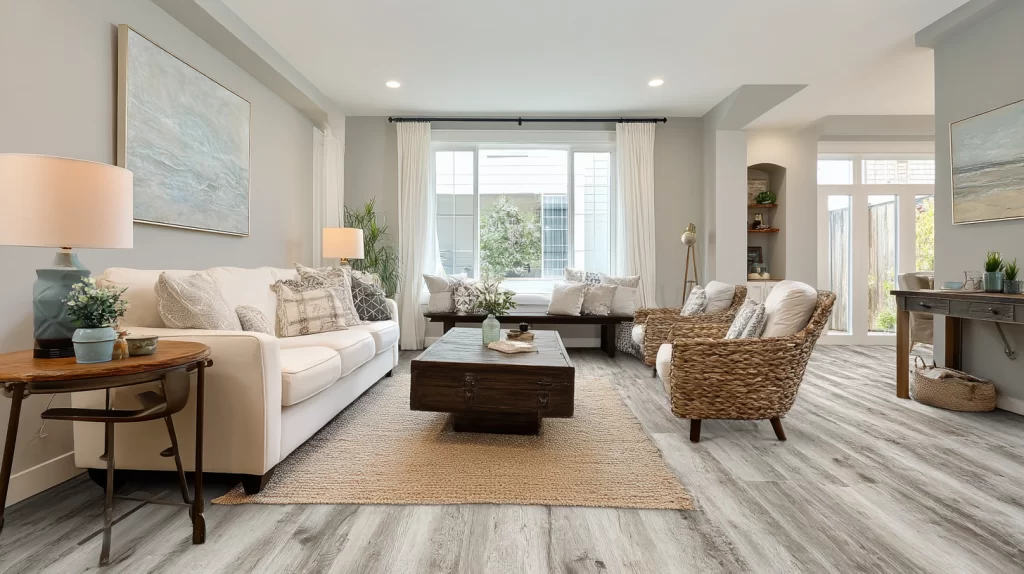
You spend thousands on new vinyl plank flooring, expecting it to look great for years. Then the kitchen finish scratches through in front of the sink before the warranty is halfway done. The entryway path shows visible wear lines, and the colour near the windows has already started fading. Most people blame the product, but the real issue is almost always a choice made before the floor was even installed. Knowing what controls how long luxury vinyl flooring lasts helps you pick the right product for the right room before anything goes wrong.
What the Wear Layer Is and Why It Matters Most
Every vinyl plank has a clear coating on top of the printed design. That coating is called the wear layer, and it is the only thing standing between daily use and the print underneath. Here is how the wear layer is affected:
- Foot traffic wears it down a little with each step.
- Furniture legs press and drag across it during everyday movement.
- Pet claws leave fine marks that add up over time.
- Spills left sitting too long eat into the finish.
The wear layer is what helps your floor stay looking great for years. Thicker layers take daily traffic in stride, while thinner ones can let the design underneath show through. Thickness is measured in mils, just a thousandth of an inch, but the difference between 6 and 20 mil is easy to see once the floor is in place. That number says more about how long your floor will last than the brand or price ever could.
Wear Layer Thickness Breakdown
A 6 mil product and a 20 mil product may look the same in the box, but they hold up very differently once they are down and handling real traffic.
- 6 mil Best for low-traffic rooms like guest bedrooms and closets, typically lasting around 4 to 7 years.
- 12 mil Fits most residential spaces with moderate traffic, such as living rooms and home offices, typically lasting around 8 to 12 years.
- 20 mil Built for active households with kids, pets, and heavy daily use, typically lasting 15 to 20 years or more.
- 28+ mil Designed for commercial spaces like retail stores, restaurants, and offices with constant movement all day.
A lot of people assume a thicker plank means a tougher floor, but that is not how vinyl works. An 8mm plank with a 6 mil wear layer will scratch through faster than a 5mm plank with 20 mils on top. The coating on the surface is what keeps the floor looking good, not the height of the plank underneath.
Vinyl Core Types and Lifespan
Below the wear layer and printed design sits the core, which gives the plank its structure. Two types show up in most products, and they feel and hold up differently depending on where the floor goes.
- SPC (Stone Polymer Composite)
Limestone and vinyl polymers are pressed into a dense, rigid core. Handles dents and temperature changes well.
- WPC (Wood Polymer Composite)
Wood fibre blended with plastic for a softer, quieter feel underfoot. Not as tough against heavy use as SPC.
SPC is the better pick for kitchens, entryways, and commercial spaces that see heavy use daily. WPC feels nicer in bedrooms and living rooms where comfort underfoot matters more.
How Traffic Levels Affect Real-World Lifespan
The room where the floor goes in decides how fast the wear layer wears down. Not every space in a home puts the same demand on the surface.
- Kitchens and entryways see the most movement and wear down fastest.
- Hallways and mudrooms take traffic from all directions throughout the day.
- Living rooms and family rooms fall in the middle with steady moderate use.
- Guest bedrooms and closets see the least activity overall.
Kids running through the house and pets moving across the floor add to the wear. The busier the room, the thicker the wear layer needs to be.
Maintenance That Extends the Floor’s Life
Even a good product will not hold up if basic care is skipped. Four simple habits keep the surface looking good for years.
- Sweep or vacuum regularly to clear grit that wears down the finish.
- Damp mop with a pH-neutral cleaner made for vinyl.
- Protective pads under all furniture legs.
- No harsh chemicals, abrasive tools, or steam mops.
Why Installation Quality Matters
The subfloor matters more than most people think. Planks need a flat, dry, clean surface to sit on, and any problems underneath will eventually show up in the vinyl above. Three common subfloor issues cause floors to wear out early.
- Uneven areas create pressure points that wear through planks faster.
- Trapped moisture causes warping and buckling from underneath.
- Skipping acclimation leads to gaps between planks after installation.
Getting the subfloor levelled and moisture-tested before the first plank goes down prevents problems that cost a lot to fix later.
Signs the Floor Needs Replacing
Most floors show clear signs before they need full replacement. Paying attention to these helps you act before the damage spreads.
- Fading or discolouration that cleaning cannot fix.
- Visible marks deep enough to show the print beneath the coating.
- Warping, buckling, or planks pulling away at the edges.
- Soft spots that suggest damage underneath the vinyl.
Can luxury vinyl flooring be repaired instead of fully replaced?
In most cases, yes. Click-lock planks can be removed and swapped individually without affecting the rest of the floor. Glue-down products are harder to patch, so catching damage early makes a bigger difference with that type of installation.
Is luxury vinyl flooring a good choice for basements?
Yes, both SPC and WPC cores are waterproof, which makes vinyl plank a solid option for below-grade spaces. SPC is the better pick for basements because its rigid core handles moisture and temperature changes better than WPC.
Final Thoughts
Luxury vinyl flooring holds up well when the right product goes in the right space. For contractors and homeowners looking for quality LVP products, Rustic Wood Floor Supply carries contractor-grade luxury vinyl flooring from trusted brands at wholesale pricing. Their team can match the right mil thickness to the right room based on the actual needs of the job. Reach out to them and get the product that fits.
